
Solar Power Is More Than Megawatts: Lessons From the Ground That Shape Real Impact ☀️
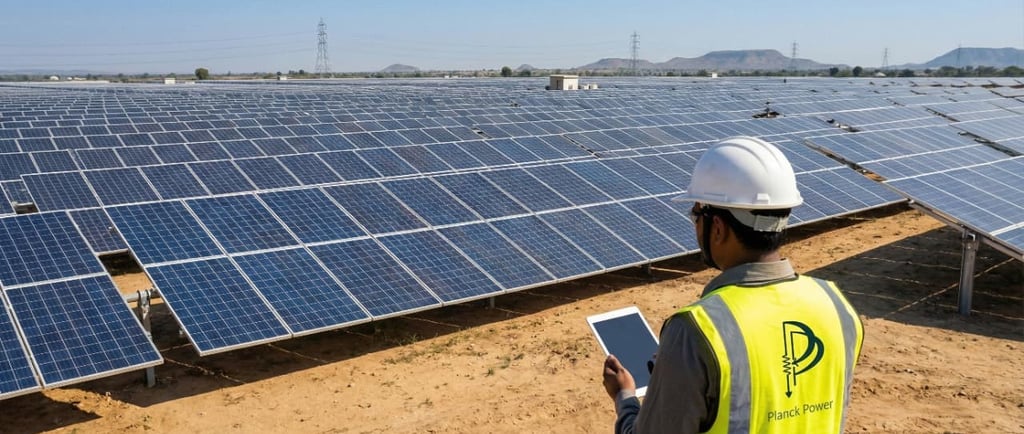
The solar industry is often measured in big numbers— megawatts installed, hectares covered, tons of carbon reduced. While these metrics are important, they tell only part of the story. The real essence of solar power lies on the ground—in planning rooms, on uneven land, under harsh sunlight, and through the coordination of dozens of people working toward a single goal: clean, reliable energy.
Having observed and worked closely with solar projects, one thing becomes clear:
Solar power is as much about execution as it is about technology.
1. Solar Projects Don’t Start With Panels — They Start With Preparation
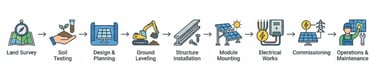
Before the first structure is erected, months of groundwork take place:
Land surveys
Soil testing
Layout planning
Shadow analysis
Access and logistics planning
A minor oversight at this stage can create long-term challenges.
For example, improper ground levelling may not show immediate issues, but over time it can affect:
Structural stability
Tracker alignment
Water drainage
Maintenance access
Good solar projects are built long before materials arrive on site.
2. Execution on Site Is Where Plans Are Truly Tested
Drawings look perfect on paper.
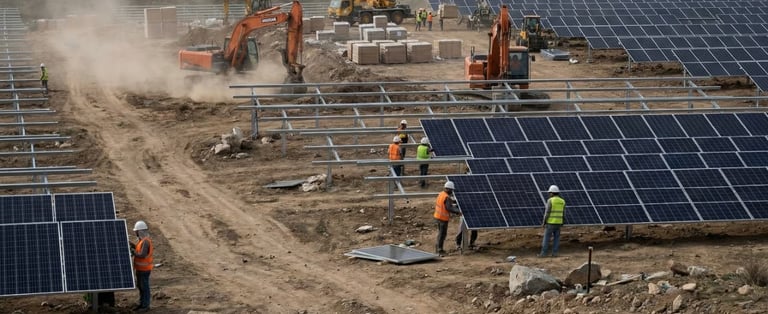
On-site, reality intervenes:
Unexpected soil conditions
Monsoon delays
Supply chain interruptions
Coordination gaps between civil, mechanical, and electrical teams
This is where experience matters.
Teams that understand on-ground execution know how to:
Adapt without compromising quality
Maintain timelines while respecting safety
Solve problems without escalating costs
Solar projects reward calm decision-making and disciplined execution.
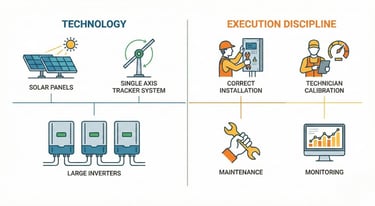
3. Technology Improves Output
— Discipline Sustains It
Modern solar plants benefit from advanced technologies:
High-efficiency modules
Single-axis trackers
Smart monitoring systems
But technology alone doesn’t guarantee performance.
Sustained generation depends on:
Correct torque during installation
Accurate tracker calibration
Clean cable routing
Proper earthing and grounding
Thorough commissioning
Small deviations, repeated across thousands of modules, can significantly affect long-term output.
In solar, details scale fast.
4. Efficiency Is Not a Feature — It’s a Process
We often talk about efficiency as a percentage or specification.
In reality, efficiency is built through:
Consistent installation practices
Skilled manpower
Strong supervision
Preventive maintenance
A well-maintained plant can outperform a poorly maintained one—even if both use similar technology.
Efficiency is not just what you install.
It’s how well you operate and maintain it over decades.
5. Every Solar Site Has Its Own Personality
No two sites behave the same.
A project on agricultural land presents different challenges than one on rocky terrain. Tracker-based systems demand higher precision than fixed structures. Dust-heavy regions require stricter cleaning schedules.
Understanding site-specific behavior allows teams to:
Optimize generation
Reduce downtime
Extend asset life
Solar success comes from respecting the character of the land.
6. Commissioning Is Not the Finish Line
Many consider commissioning as the end of a project. In truth, it’s the beginning of responsibility.
Post-commissioning success depends on:
Monitoring data analysis
Rapid fault response
Preventive O&M planning
Documentation and reporting
A solar plant’s reputation is built after it starts generating, not before.
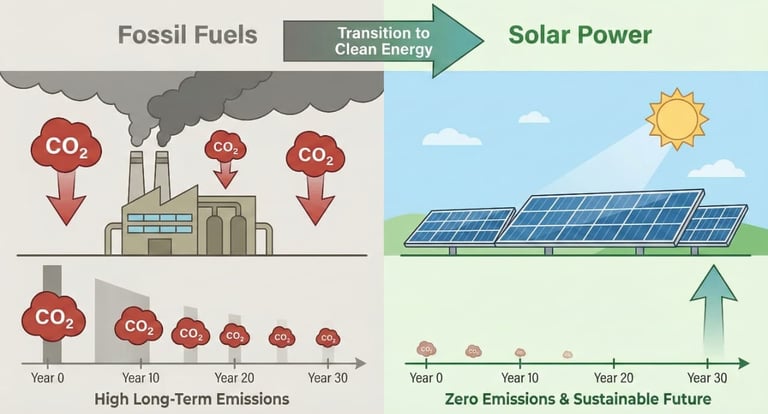
7. Carbon Reduction: The Quiet, Long-Term Impact
Unlike conventional infrastructure, solar projects deliver value silently.
Day after day, year after year, they:
Reduce dependency on fossil fuels
Lower carbon emissions
Support energy security
This impact compounds over time.
A single well-performing plant contributes not just power—but environmental accountability for decades.
8. Why the Solar Industry Needs Better Storytelling
Despite doing meaningful work, the solar sector often under-communicates its efforts.
Most people never see:
The complexity behind execution
The teamwork involved
The challenges solved daily on-site
Sharing:
Site progress
Execution milestones
Technical learning
Real performance data
builds trust, credibility, and industry confidence.
Storytelling is not marketing fluff—it is knowledge sharing.
9. Solar Projects Are Built by People, Not Just Machines
At the heart of every solar plant are:
Engineers
Technicians
Supervisors
Planners
Workers on the ground
Their experience, discipline, and commitment define project quality.
Recognising human effort is essential for building sustainable infrastructure.
Final Reflection
Solar energy represents the future—but it is built through consistent, disciplined work in the present.
Behind every megawatt installed is:
Thoughtful planning
Countless small decisions
A team committed to doing things right
The real success of solar lies not in how fast we build, but in how reliably our plants perform for the next 25 years.
And those stories—from the ground up—deserve to be shared.

Solar Power Is More Than Megawatts: Lessons From the Ground That Shape Real Impact ☀️
The solar industry is often measured in big numbers— megawatts installed, hectares covered, tons of carbon reduced. While these metrics are important, they tell only part of the story. The real essence of solar power lies on the ground—in planning rooms, on uneven land, under harsh sunlight, and through the coordination of dozens of people working toward a single goal: clean, reliable energy.
Having observed and worked closely with solar projects, one thing becomes clear:
Solar power is as much about execution as it is about technology.
1. Solar Projects Don’t Start With Panels — They Start With Preparation
Before the first structure is erected, months of groundwork take place:
Land surveys
Soil testing
Layout planning
Shadow analysis
Access and logistics planning
A minor oversight at this stage can create long-term challenges.
For example, improper ground levelling may not show immediate issues, but over time it can affect:
Structural stability
Tracker alignment
Water drainage
Maintenance access
Good solar projects are built long before materials arrive on site.
2. Execution on Site Is Where Plans Are Truly Tested
Drawings look perfect on paper.
On-site, reality intervenes:
Unexpected soil conditions
Monsoon delays
Supply chain interruptions
Coordination gaps between civil, mechanical, and electrical teams
This is where experience matters.
Teams that understand on-ground execution know how to:
Adapt without compromising quality
Maintain timelines while respecting safety
Solve problems without escalating costs
Solar projects reward calm decision-making and disciplined execution.
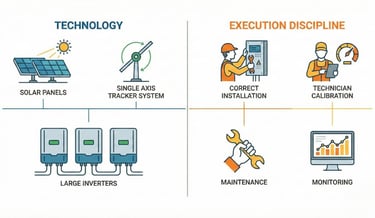
3. Technology Improves Output
— Discipline Sustains It
Modern solar plants benefit from advanced technologies:
High-efficiency modules
Single-axis trackers
Smart monitoring systems
But technology alone doesn’t guarantee performance.
Sustained generation depends on:
Correct torque during installation
Accurate tracker calibration
Clean cable routing
Proper earthing and grounding
Thorough commissioning
Small deviations, repeated across thousands of modules, can significantly affect long-term output.
In solar, details scale fast.
4. Efficiency Is Not a Feature — It’s a Process
We often talk about efficiency as a percentage or specification.
In reality, efficiency is built through:
Consistent installation practices
Skilled manpower
Strong supervision
Preventive maintenance
A well-maintained plant can outperform a poorly maintained one—even if both use similar technology.
Efficiency is not just what you install.
It’s how well you operate and maintain it over decades.
5. Every Solar Site Has Its Own Personality
No two sites behave the same.
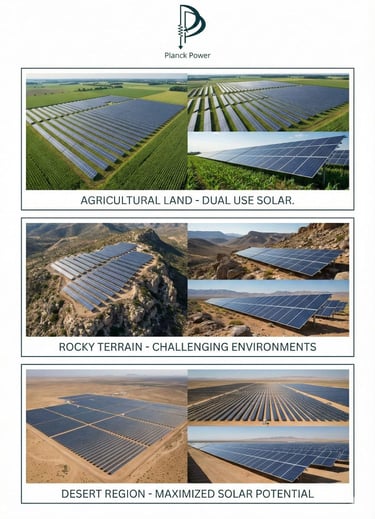
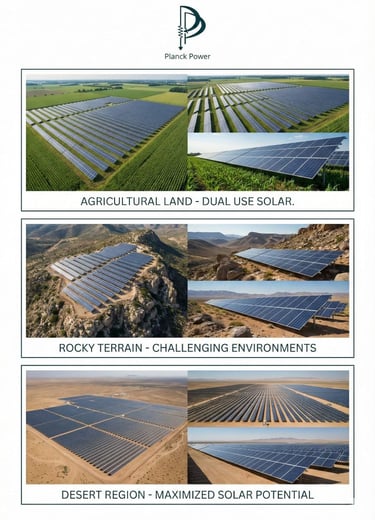
A project on agricultural land presents different challenges than one on rocky terrain. Tracker-based systems demand higher precision than fixed structures. Dust-heavy regions require stricter cleaning schedules.
Understanding site-specific behavior allows teams to:
Optimize generation
Reduce downtime
Extend asset life
Solar success comes from respecting the character of the land.
6. Commissioning Is Not the Finish Line
Many consider commissioning as the end of a project. In truth, it’s the beginning of responsibility.
Post-commissioning success depends on:
Monitoring data analysis
Rapid fault response
Preventive O&M planning
Documentation and reporting
A solar plant’s reputation is built after it starts generating, not before.
7. Carbon Reduction: The Quiet, Long-Term Impact
Unlike conventional infrastructure, solar projects deliver value silently.
Day after day, year after year, they:
Reduce dependency on fossil fuels
Lower carbon emissions
Support energy security
This impact compounds over time.
A single well-performing plant contributes not just power—but environmental accountability for decades.
8. Why the Solar Industry Needs Better Storytelling
Despite doing meaningful work, the solar sector often under-communicates its efforts.
Most people never see:
The complexity behind execution
The teamwork involved
The challenges solved daily on-site
Sharing:
Site progress
Execution milestones
Technical learning
Real performance data
builds trust, credibility, and industry confidence.
Storytelling is not marketing fluff—it is knowledge sharing.
9. Solar Projects Are Built by People, Not Just Machines
At the heart of every solar plant are:
Engineers
Technicians
Supervisors
Planners
Workers on the ground
Their experience, discipline, and commitment define project quality.
Recognising human effort is essential for building sustainable infrastructure.
Final Reflection
Solar energy represents the future—but it is built through consistent, disciplined work in the present.
Behind every megawatt installed is:
Thoughtful planning
Countless small decisions
A team committed to doing things right
The real success of solar lies not in how fast we build, but in how reliably our plants perform for the next 25 years.
And those stories—from the ground up—deserve to be shared.
Powering Future
Powering Future explores how solar energy is transforming the way we generate, distribute, and consume power. From innovative technologies to sustainable solutions, this article highlights the role of clean energy in building a resilient and energy-secure future.
Power Planck
1/16/20263 min read
Contact


Planck Power, Bank of Baroda building, 4th floor opp Ratlami Namkeen, Vaishali Nagar, Ajmer (Raj)
8854958508
info@planckpower.in